via sfgate.com
'Use and Abuse of Literature,' by Marjorie Garber
Seth Lerer, Special to The Chronicle
03/27/11
Marjorie Garber
The Use and Abuse of Literature
By Marjorie Garber
(Pantheon; 320 pages; $28.95)
Why read? You'd think that with the e-book and the Internet, with Google searching and channel surfing, the experience of curling up with a good book is as archaic as a buggy ride. You'd think, too, that with graphic novels and celebrity memoirs, and with Wikipedia offering their entries in "simple English," the very idea of literature itself had disappeared and, along with it, the language of craft and cadence that made memorable all writers from Shakespeare to Shaw.
Not so, argues Marjorie Garber, in "The Use and Abuse of Literature," an immensely readable yet vastly erudite reflection on the history of literary writing, literary criticism and the social value of both. Garber, a renowned Harvard professor, offers us a lesson in community and common sense in her book. Less a polemic than a meditation, she poses all the central questions of a literate person's life: What do we mean by literature today? Why study it? Is there a form of writing that is not literary?
This is a book of questions rather than answers. For Garber argues that literature is a form of writing that offers unanswered (and potentially unanswerable) questions. Literary language is rife with figures of speech, allusions to other writings and characters facing ambiguous moral decisions.
The teaching and study of literature, too, is full of questions. As Garber puts it, in a lively classroom anecdote about teaching her most beloved author, "Since Shakespeare wrote so many years ago, scholars had had all this time to get it right, hadn't they? What was the problem, and why couldn't the professor give the right answer right away, instead of beating around the bush?"
Garber responds like a true college professor (as one myself, I applaud her frankness): "The absence of answers or determinate meanings" is exactly the set of "qualities that make a passage or a work literary." Literary works have no single meaning, whatever the author intended. Indeed, Garber points out, "one of the key features of what might be called the literary unconscious is a tendency on the part of the text to outwit or to confound the activity of closing or ending."
This is not relativism. This is not deconstruction. People have been saying things like this about literature since Horace - and indeed, Horace's ancient dictum (that literature should both teach and delight) is, I believe, one of the underlying themes of Garber's book. It's just that what Garber thinks literature teaches is not a set of univocal moral truths but rather a habit of mind: a way of questioning the world, a way of understanding just how hard it is to make decisions, fall in love, express desire, worship, rule and serve.
We read books often to learn how others do these things - and often to learn how others failed to do them. We read books to be pleasured, too, into an admiration for a writer's choice of words or for an author's command of our emotions. One of the most vivid points that Garber makes is that "scenes of reading in literature are often sites of seduction."
When we read stories of other people reading, invariably they are stories about characters falling in love, or lust, over a book. Garber makes us remember Dante's Paolo and Francesca, twirling in hell because they fell in love while reading the story of Lancelot and Guinevere. She makes us remember Jane Austen's Louisa Musgrove and Captain Benwick, who fell in love "over poetry." And she makes us remember, too, that when we read we are ourselves seduced by literature.
It is this point that leads to what I think is the most powerful of Garber's claims: that all literature, of whatever time, is in fact contemporary, because when we read it, we make it our own. This is not the sin of presentism (the idea that all that matters is me at this time and what I think about this book). It is the story of history.
People have been reading Chaucer for 600 years. They read him differently depending on their time, and when we come to read him, we come to a 14th century world with 21st century eyes. We can try to be historical about it (say, to ignore post-Freudian notions of the psyche, or post-Marxist notions of class), but we are who we are.
"If every production of a play," Garber writes, "is an interpretation, then so is every reading of that play. This is especially true for lyric poetry, for fiction, for sermons, for treatises, for political speeches, for any work in language that makes a claim upon our literary attention." Or, as she puts it elsewhere, "Reading and criticism are themselves creative acts, remaking the work, making it new, making it contemporary, making it personal, making it productively strange and therefore endowing it with fresh and startling power."
Each time we read a book, we see it differently; each time we read a book, we see ourselves differently in it. Garber seems to have read everything, and this book offers, in addition to seductive argument, a complete anthology of quotations and engagements with poets, playwrights, novelists, biographers and literary theorists. Her book is a testament not simply to Great Books but also to a great conversation between ourselves and the past and among ourselves as present readers. Why read? In the end, the answer to the question is as complex and compelling as "why live?"
Seth Lerer is dean of arts and humanities at UC San Diego. E-mail comments to books@sfchronicle.com.
http://sfgate.com/cgi-bin/article.cgi?f=/c/a/2011/03/27/RV581IFQJ1.DTL
Friday, April 1, 2011


Wednesday, March 30, 2011
Piedmont shelves Oakland library services fee
via sfgate.com
http://www.sfgate.com/cgi-bin/article.cgi?f=/c/a/2011/03/27/BAE41ICUDK.DTL&type=printable
Carolyn Jones, Chronicle Staff Writer
03/27/11
Piedmont has shut the book on libraries. Or at least paying for them.
In the latest example of the strained relationship between the neighboring cities of Piedmont and Oakland, Piedmont has decided - for now, anyway - to stop paying Oakland for library services.
"A lot of people are saying, why are we paying this large sum of money for people to use the library if we don't have to?" said Piedmont City Administrator Geoffrey Grote, noting that any California resident is free to obtain an Oakland library card.
Until 2008, Piedmont - which has no libraries of its own - paid Oakland $350,000 a year for library services. When the contract expired, Oakland asked to raise the fee to $395,000 a year, in part to cover a steep rent increase at the branch used most by Piedmont residents, the Piedmont Avenue Branch.
Piedmont countered with a less expensive offer, the same $350,000 but with a 5 percent annual increase over five years.
Oakland said no. Negotiations have been stalled for at least a year, during which Piedmont stopped paying Oakland anything.
Oakland officials are not pleased.
"I think it's unconscionable for a city as wealthy as Piedmont to do this," said Oakland City Councilwoman Jane Brunner. "It is not acceptable."
Oakland taxpayers pay about $20 million annually for library services, half through the Measure Q parcel tax and half from the city's general fund. That amounts to $130 per household, or $50 a year for each resident, including children.
Oakland wanted Piedmont residents to pay the same.
Emeryville renews
Emeryville, another neighboring city without its own libraries, pays Oakland $100,000 a year, plus an additional $2,500 to the Friends of the Golden Gate Library, the branch closest to the Emeryville border.
Emeryville not only renewed the contract, it offered a 60 percent raise over the 2008 rate.
"I think it's a valuable resource for Emeryville residents, although I don't know how much more we can afford," said Emeryville City Manager Pat O'Keeffe.
Oakland's public library has 17 branches and offers services such as tool lending, computer classes and special collections of American Indian, African American, Spanish and Asian language literature.
Budget slashed sharply
Its budget, like most public amenities in Oakland, has been slashed significantly the past few years. Branches are now closed every Monday, and staffing is down 20 percent.
Oakland's libraries are again poised for cuts, as the city prepares to slice $46 million from its $400 million general fund budget.
Piedmont has weathered the recession relatively unscathed. Until this year, home sale prices have risen, to an average of $1.5 million, but transfer taxes have plummeted 50 percent.
Piedmont's 5 percent raise offer for Oakland library services was more generous than what it offered its own employees, Grote said.
Furthermore, Piedmont would not be receiving extra benefits - such as its own branch or a bookmobile - if it agreed to pay the amount Oakland requested.
In fact, it would receive the same benefits whether it paid $395,000 a year or nothing at all, he said.
"There's no increase in their costs to serve little Piedmont," he said. "Most of the money they collect from us is pure profit."
Patrons supportive
Piedmont officials might be cautious with their money, but residents there have been exceedingly generous to the library, said Oakland library officials.
They volunteer, donate books and money, and are frequent library users, said Oakland library director Carmen Martinez.
"So many of our wonderful supporters live in Piedmont," she said. "And I know they are behind us."
E-mail Carolyn Jones at carolynjones@sfchronicle.com.
http://www.sfgate.com/cgi-bin/article.cgi?f=/c/a/2011/03/27/BAE41ICUDK.DTL&type=printable
Carolyn Jones, Chronicle Staff Writer
03/27/11
Piedmont has shut the book on libraries. Or at least paying for them.
In the latest example of the strained relationship between the neighboring cities of Piedmont and Oakland, Piedmont has decided - for now, anyway - to stop paying Oakland for library services.
"A lot of people are saying, why are we paying this large sum of money for people to use the library if we don't have to?" said Piedmont City Administrator Geoffrey Grote, noting that any California resident is free to obtain an Oakland library card.
Until 2008, Piedmont - which has no libraries of its own - paid Oakland $350,000 a year for library services. When the contract expired, Oakland asked to raise the fee to $395,000 a year, in part to cover a steep rent increase at the branch used most by Piedmont residents, the Piedmont Avenue Branch.
Piedmont countered with a less expensive offer, the same $350,000 but with a 5 percent annual increase over five years.
Oakland said no. Negotiations have been stalled for at least a year, during which Piedmont stopped paying Oakland anything.
Oakland officials are not pleased.
"I think it's unconscionable for a city as wealthy as Piedmont to do this," said Oakland City Councilwoman Jane Brunner. "It is not acceptable."
Oakland taxpayers pay about $20 million annually for library services, half through the Measure Q parcel tax and half from the city's general fund. That amounts to $130 per household, or $50 a year for each resident, including children.
Oakland wanted Piedmont residents to pay the same.
Emeryville renews
Emeryville, another neighboring city without its own libraries, pays Oakland $100,000 a year, plus an additional $2,500 to the Friends of the Golden Gate Library, the branch closest to the Emeryville border.
Emeryville not only renewed the contract, it offered a 60 percent raise over the 2008 rate.
"I think it's a valuable resource for Emeryville residents, although I don't know how much more we can afford," said Emeryville City Manager Pat O'Keeffe.
Oakland's public library has 17 branches and offers services such as tool lending, computer classes and special collections of American Indian, African American, Spanish and Asian language literature.
Budget slashed sharply
Its budget, like most public amenities in Oakland, has been slashed significantly the past few years. Branches are now closed every Monday, and staffing is down 20 percent.
Oakland's libraries are again poised for cuts, as the city prepares to slice $46 million from its $400 million general fund budget.
Piedmont has weathered the recession relatively unscathed. Until this year, home sale prices have risen, to an average of $1.5 million, but transfer taxes have plummeted 50 percent.
Piedmont's 5 percent raise offer for Oakland library services was more generous than what it offered its own employees, Grote said.
Furthermore, Piedmont would not be receiving extra benefits - such as its own branch or a bookmobile - if it agreed to pay the amount Oakland requested.
In fact, it would receive the same benefits whether it paid $395,000 a year or nothing at all, he said.
"There's no increase in their costs to serve little Piedmont," he said. "Most of the money they collect from us is pure profit."
Patrons supportive
Piedmont officials might be cautious with their money, but residents there have been exceedingly generous to the library, said Oakland library officials.
They volunteer, donate books and money, and are frequent library users, said Oakland library director Carmen Martinez.
"So many of our wonderful supporters live in Piedmont," she said. "And I know they are behind us."
E-mail Carolyn Jones at carolynjones@sfchronicle.com.
Sunday, March 27, 2011
Bye Bye Borders
The Borders in Pleasant Hill is closing down. In a strange turn of events, it would appear that the small mom and pop used book store is on its way to outliving the big box store. Interesting.
The real significance of this event though is that the PHBC will now need a new meeting spot! Where to go? Leave some suggestions in the comment area.
The real significance of this event though is that the PHBC will now need a new meeting spot! Where to go? Leave some suggestions in the comment area.
Monday, March 21, 2011
Sardonic Drinking Game
For those reading Robots Have No Tails, have a drink every time the author uses a form of the word sardonic. You will find your subconscious inventing amazing machines in no time.
I write this only slightly sardonically.
I write this only slightly sardonically.
Wednesday, March 16, 2011
Tuesday, March 8, 2011
March Book of the Month: Robots Have No Tails by Henry Kuttner

Via goodreads.com:
Hounded by creditors and heckled by an uncooperative robot, binge-drinking inventor Galloway Gallegher must solve the mystery of his own machines before his dodgy financing and reckless lifestyle catch up with him!
This complete collection of Kuttner's five classic "Gallegher" stories presents the author at the height of his imaginative genius.
Sunday, February 27, 2011
New Book Release by Local Author

Local author Penny Warner has her latest book, How to Survive a Killer Seance, being released this Tuesday March 1st.
You can read an interview with Warner at http://pleasanthillbookclub.blogspot.com/2009/07/interview-with-local-authors-penny.html
Here is a preview of her book and appearance dates:
Mixing fun and fund-raising seems the perfect job for Presley Parker, which is why she started her Killer Parties event-planning business. But her previous parties pale in comparison to a spooky séance and a creepy crime…
Presley’s newest gig is a séance party at San Jose’s famous Winchester Mystery House. Her client, Jonathan Ellington, plans to use the event to unveil his new “4-D” holographic technology, which will bring former owner Sarah Winchester “back from the dead.”
But the stunt backfires when a disembodied voice accuses Ellington of infidelity in front of his wife and business associates, and the techie who’s monitoring the holograph is found murdered. Suspicion falls on Ellington, but as Presley tries to get at the truth, she doesn’t need a Ouija board to tell her someone wants to scare her to death…
Mar 2 – 7:00 pm – M is for Mystery – San Mateo
Mar 3 – 3:00 pm – Orinda Books
Mar 10 – 7:00 pm – Rakestraw Books – Danville
Mar 12 – 1:00 pm – Barnes & Noble – Stonestown
Mar 12 – 4:00 pm – Barnes & Noble - Colma
Mar 16 – 4:00 pm – Towne Center Books – Pleasanton
Mar 17 – Noon - San Ramon Valley Newcomers - Danville
Mar 24-26 – Fri-Sun - Left Coast Crime Conference – Santa Fe, NM
Mar 31 – 7:00 pm – Bay Books – San Ramon
April 6 – 7:00 pm – Clayton Library – Clayton
April 28-30 – Fri-Sun - Malice Domestic Conference – Bethesda, MD
May 13 – Fri - 8:00 am – General Federation of Women’s Clubs – San Jose
Sept 16-17 – Sat-Sun - Central Coast Writers Conference – Cuesta College, San Luis Obispo
Thursday, February 24, 2011
This Week in History Reading
http://www.columbiamissourian.com/stories/2011/02/23/thomas-jeffersons-books-found-washington-university-library/
This is kind of old news, but the above article talks about the recent find of 69 (other sources say 74) of Thomas Jefferson's books that were believed to be lost from his second library. His first library was donated to create the Library of Congress. Apparently after donating his first library he needed to cure his book fix and compiled another 3000 book library. Coolest part of this article is how Jefferson would mark his books.
http://www.rumsfeld.com/library/
For those who want to see deeper into the behind the scenes of the Iraq War this seems to be an incredible find. Donald Rumsfeld, Secretary of Defense for first several years of the war, has a new memoir out and had a website created to drum up interest. I've only begun to explore the library section, but it has thousands of declassified papers regarding the Iraq and Afghan wars. Great reading for history junkies.
This is kind of old news, but the above article talks about the recent find of 69 (other sources say 74) of Thomas Jefferson's books that were believed to be lost from his second library. His first library was donated to create the Library of Congress. Apparently after donating his first library he needed to cure his book fix and compiled another 3000 book library. Coolest part of this article is how Jefferson would mark his books.
http://www.rumsfeld.com/library/
For those who want to see deeper into the behind the scenes of the Iraq War this seems to be an incredible find. Donald Rumsfeld, Secretary of Defense for first several years of the war, has a new memoir out and had a website created to drum up interest. I've only begun to explore the library section, but it has thousands of declassified papers regarding the Iraq and Afghan wars. Great reading for history junkies.
Tuesday, February 22, 2011
Losing 'Focus'

Starting next month, the monthly Pleasant Hill Community Focus will no longer have book review contributions from the Pleasant Hill Book Club. But not to worry, they will start up again over the summer when your humble reviewer has a tad more free time.
Thursday, February 3, 2011
Book of the Year Award 2010

After a very close vote...the winner of the 2010 Pleasant Hill Book Club Best Book of the Year Award goes to...
Abraham Lincoln: Vampire Hunter!

The winner for Worst Book of the Year was Watership Down. Kind of sad that it has to be placed in such bad company, but it just goes to show how good a book year it was for the club for a book like Watership Down to be the worst.
Februay Book of the Month
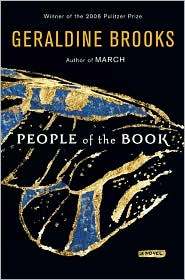
People of the Book by Geraldine Brooks
One of the earliest Jewish religious volumes to be illuminated with images, the Sarajevo Haggadah survived centuries of purges and wars thanks to people of all faiths who risked their lives to safeguard it. Geraldine Brooks, the Pulitzer Prize-winning author of March, has turned the intriguing but sparely detailed history of this precious volume into an emotionally rich, thrilling fictionalization that retraces its turbulent journey. In the hands of Hanna Heath, an impassioned rare-book expert restoring the manuscript in 1996 Sarajevo, it yields clues to its guardians and whereabouts: an insect wing, a wine stain, salt crystals, and a white hair. While readers experience crucial moments in the book's history through a series of fascinating, fleshed-out short stories, Hanna pursues its secrets scientifically, and finds that some interests will still risk everything in the name of protecting this treasure. A complex love story, thrilling mystery, vivid history lesson, and celebration of the enduring power of ideas, People of the Book will surely be hailed as one of the best of 2008. --Mari Malcolm
Tuesday, February 1, 2011
Book of the Year Award 2010
The process has begun and the ballots are ready...
Best Book of the Year
Hunger Games
Abraham Lincoln: Vampire Hunter
Extremely Loud and Incredibly Close
Worst Book of the Year
Room
Hollow Chocolate Bunnies of the Apocalypse
Watership Down
All members agreed that trimming down the year's selection of books was very difficult. This was easily the best book year for the PHBC.
Tomorrow night the vote will commence and your champion and loser of the year will be announced!
Best Book of the Year
Hunger Games
Abraham Lincoln: Vampire Hunter
Extremely Loud and Incredibly Close
Worst Book of the Year
Room
Hollow Chocolate Bunnies of the Apocalypse
Watership Down
All members agreed that trimming down the year's selection of books was very difficult. This was easily the best book year for the PHBC.
Tomorrow night the vote will commence and your champion and loser of the year will be announced!
Earth (The Book)
The review is now available at the Pleasant Hill Community Focus website...
http://ourcommunityfocus.com/view/full_story/11189078/article-Earth--The-Book--A-Visitor%E2%80%99s-Guide-to-the-Human-Race?instance=lead_story_left_column
check it out!
http://ourcommunityfocus.com/view/full_story/11189078/article-Earth--The-Book--A-Visitor%E2%80%99s-Guide-to-the-Human-Race?instance=lead_story_left_column
check it out!
Subscribe to:
Posts (Atom)